Home Insulation

Keep the comfort in. Keep energy costs down.

Efficient appliances can only do so much if the warmth they create escapes through the roof, walls and floors. Quality insulation helps your all-electric home hold onto the energy you have already paid for.
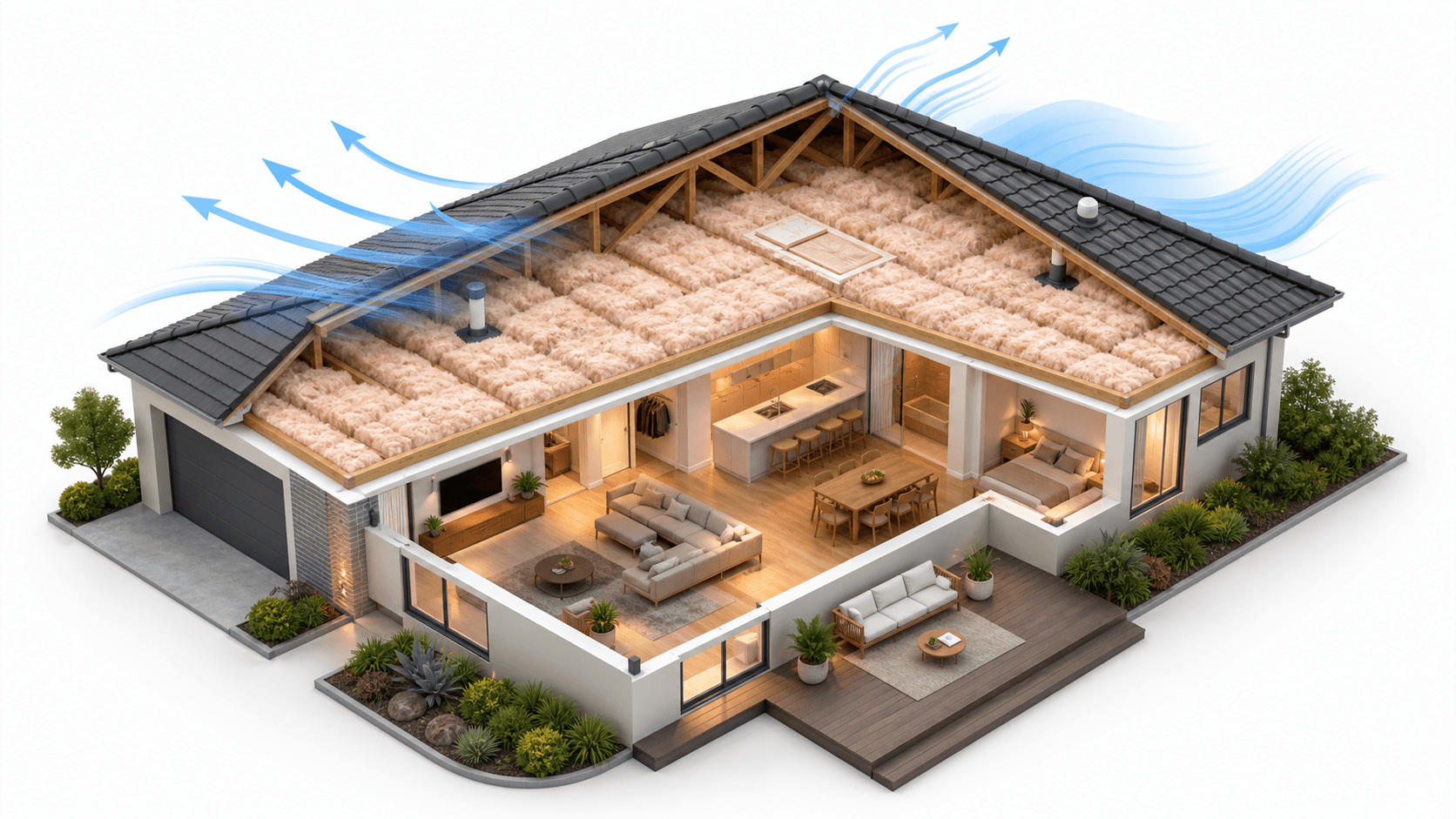
A whole-home approach Ceiling, wall and underfloor insulation help slow unwanted heat transfer, allowing efficient heating and cooling to maintain comfort with less wasted energy.
Comfort that lastsHelp rooms stay warmer in winter and cooler through summer.
Less wasted energyReduce unwanted heat transfer so efficient appliances do not work harder than they need to.
Planned for your homeChoose the right insulation approach for the building, access and areas that need attention.

The missing piece

Don't let your savings drift away

Going all-electric is about using energy better. Insulation supports that goal by slowing the movement of heat into and out of your home, helping every kilowatt used for heating or cooling go further.

01

More stable indoor temperatures

Insulation helps reduce sharp temperature swings, cold ceilings and rooms that heat up too quickly in summer.

02

Better heating and cooling performance

A well-insulated home gives reverse-cycle systems a better chance to reach and maintain a comfortable temperature efficiently.

03

Lower demand on your appliances

When conditioned air stays where it belongs, your heating and cooling equipment can run less often and with less strain.

04

A smarter whole-home upgrade

Insulation, draught management and efficient electric appliances work together. Treating them as one system produces a more complete result.

Energy retention

The best energy saving is the energy your home doesn't lose

Solar can generate clean electricity and efficient appliances can use less of it. Insulation helps complete the picture by keeping useful warmth and cool air inside for longer.

  • Ceiling and roof spaces are often the first place to assess.
  • Existing insulation can be patchy, compressed, moved or below current expectations.
  • Wall and underfloor opportunities depend on the construction and access available.
  • Safe clearances around electrical equipment, downlights and ventilation matter.

Where insulation works

CeilingHelps slow heat moving through the largest overhead surface.
WallsSupports more consistent temperatures around the rooms you live in.
FloorsCan improve comfort in suitable homes with accessible suspended floors.
GapsDraughts and unsealed penetrations can undermine an otherwise good result.

Instant quote calculator

Start with a clearer idea of cost

Tell us a little about your property, the areas you want insulated and what access is like. Our customer-facing calculator will give you an initial estimate and help our team understand the next step.

1. Your homeProperty type, size and location
2. Your projectAreas, access and current insulation
3. Your estimateA practical starting point for your quote

Our process

A practical path from estimate to installation

We keep the process straightforward and make sure the proposed work suits the home before installation begins.

01

Instant estimate

Use the calculator to tell us about your home and get an initial price guide.

02

Property review

We confirm access, existing insulation and any site conditions that affect the work.

03

Clear final quote

You receive a defined scope and price before deciding whether to proceed.

04

Careful installation

The work is completed with attention to coverage, safety clearances and a tidy finish.

Common questions

What homeowners want to know

Every property is different, but these are the questions that usually come up at the start.

How do I know if my home needs more insulation?
Uneven temperatures, rooms that cool down quickly in winter, excessive summer heat and high heating or cooling use can all be signs. The age, coverage and condition of existing insulation also matter, so a property review may be needed to confirm what is there.
Can you add insulation over existing insulation?
Sometimes. Existing material first needs to be checked for condition, coverage, moisture, contamination and safe clearances. The right approach depends on what is already installed and the result the home needs.
Should insulation come before a new heating and cooling system?
It is worth considering them together. Improving the building shell can reduce how hard a new system needs to work and may affect the most suitable system design. Where practical, we plan upgrades in the order that makes sense for the whole home.
Which part of the home should I insulate first?
Ceiling insulation is often a strong place to begin, but the best priority depends on your home's construction, what is already installed and where comfort problems are occurring.
Is an instant estimate the final price?
No. It is a useful starting point based on the information entered. We confirm the final scope and price after checking property details, access, existing materials and any installation requirements.

Make your all-electric home work harder for you

Keep more of the comfort your efficient appliances create. Start with an instant insulation estimate or speak with our team about the right next step for your home.