Heating + cooling
Reverse-cycle options
Assess a correctly sized system that may provide efficient heating and cooling from one appliance.
Victorian rental providers
New minimum energy efficiency standards begin in phases from 1 March 2027. All Electric Homes helps rental providers assess heating, cooling, hot water and electrical readiness, then plan practical upgrades around the property and tenancy.
What rental providers need to know
Victoria’s existing rental minimum standards already apply. Rental providers and agents must make sure a property meets those standards when it is advertised or offered for rent. The new energy efficiency requirements add phased rules for heating, cooling, hot water, shower heads, ceiling insulation and draughtproofing.
Not every requirement starts on the same day or applies in the same way. Some are triggered when equipment fails beyond repair; others apply at the start of a new rental agreement or when an agreement becomes month-to-month. Exemptions may also apply to some properties.
An early site assessment can identify electrical capacity, equipment condition and installation constraints before a breakdown or tenancy change creates urgency.
Property managers and agencies
Sit down with All Electric Homes to review agreement dates, existing systems and likely triggers across your managed properties. We will help turn that information into a staged portfolio roadmap for your landlords.
Standards at a glance
This summary is a planning guide. Check the current Consumer Affairs Victoria requirements, technical specifications and exemptions for your property before arranging work.
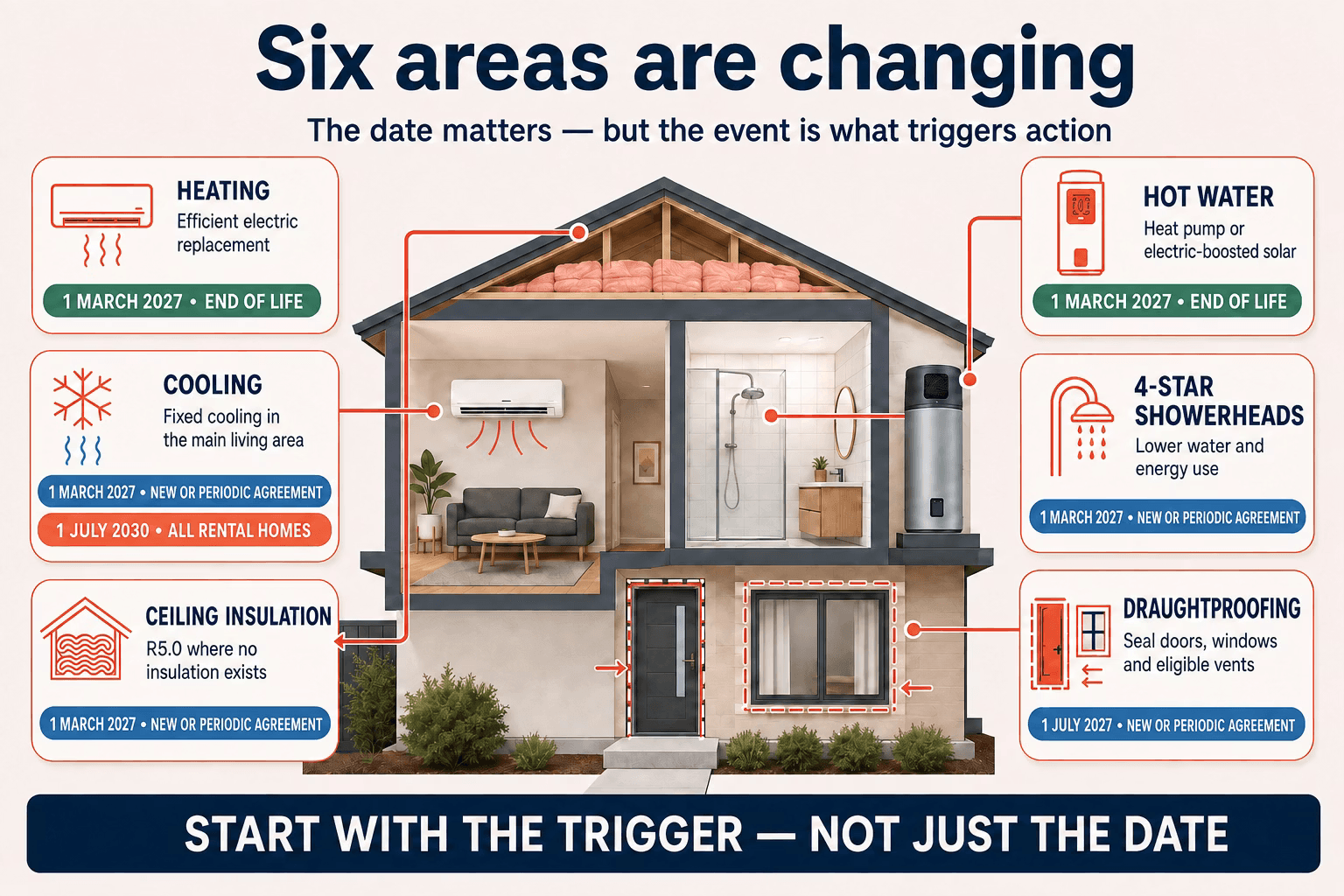
| Area | From | Common trigger and requirement |
|---|---|---|
| Heating | 1 March 2027 | When an existing fixed heater fails and cannot be repaired, it must be replaced with an energy-efficient fixed electric heating system with an outlet in the main living area. Existing heating minimum standards continue to apply now. |
| Cooling | 1 March 2027 1 July 2030 |
From March 2027, efficient fixed cooling in the main living area is required at the start of a new rental agreement, when an agreement becomes month-to-month, or when an existing fixed cooling system fails and cannot be repaired. From July 2030, all rental properties must meet the cooling standard. |
| Hot water | 1 March 2027 | When an existing hot water system permanently fails and cannot be repaired, it must generally be replaced with an eligible heat pump water heater or electric-boosted solar water heater. |
| Shower heads | 1 March 2027 | At the start of a new rental agreement, or when an agreement becomes month-to-month, shower heads must generally have a minimum 4-star WELS rating. |
| Ceiling insulation | 1 March 2027 | At the start of a new rental agreement, or when an agreement becomes month-to-month, ceiling spaces with no insulation must generally receive R5.0 insulation installed by a qualified installer. An electrical safety checklist must be completed, with identified electrical issues addressed by a licensed electrician, within 30 days before installation. |
| Draughtproofing | 1 July 2027 | At the start of a new rental agreement, or when an agreement becomes month-to-month, external doors, windows and unsealed wall vents must generally be draughtproofed. If the property has gas appliances, a licensed plumber must complete a gas safety check less than six months before the work; identified unflued or open-flued appliances can prevent draughtproofing from proceeding. |
A reverse-cycle air conditioner may satisfy both the heating and cooling standards when the system, energy rating, climate-area rating and installation location meet the relevant requirements.
Upgrade planning
A coordinated assessment helps avoid selecting equipment before checking the electrical supply, switchboard, space, access and installation constraints.
Assess a correctly sized system that may provide efficient heating and cooling from one appliance.
Review system location, household demand, noise, drainage, electrical supply and current product eligibility.
Check circuit protection, available capacity and any electrical work needed to support new equipment.
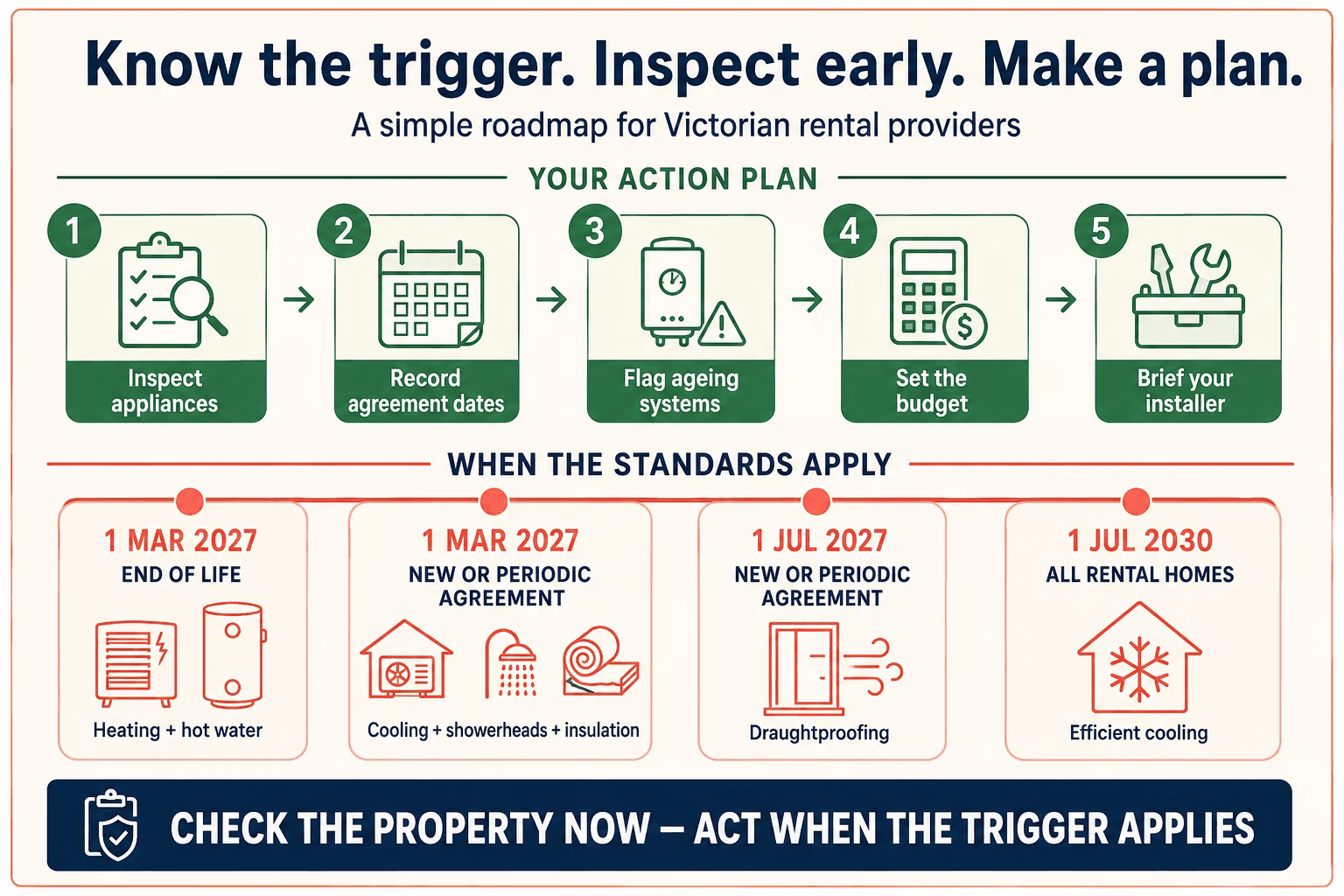
Prioritise existing obligations, likely failure points, tenancy triggers and upgrades that can be combined.
Our process
Start with the existing equipment and the next likely trigger. We will help turn that information into a practical, property-specific scope.
Share the address, tenancy status, existing systems and any known issues or planned replacement dates.
We review equipment, access, electrical capacity, installation constraints and suitable upgrade options.
Your proposal sets out the recommended work, inclusions, exclusions and any available discount pathway.
Licensed trades complete the agreed work and explain system operation, servicing and warranty details.
Common questions
Official resources
Government guidance can change. Use these official Victorian sources for the latest dates, technical specifications, triggers, exemptions and available support.
This page provides general information for planning purposes and is not legal advice. Requirements and exemptions are property-specific. Confirm the current rules with Consumer Affairs Victoria before relying on this information or committing to work.
Tell us what is installed now and what is changing next. We will help map a practical pathway for heating, cooling, hot water and electrical readiness.