01 / MAKE
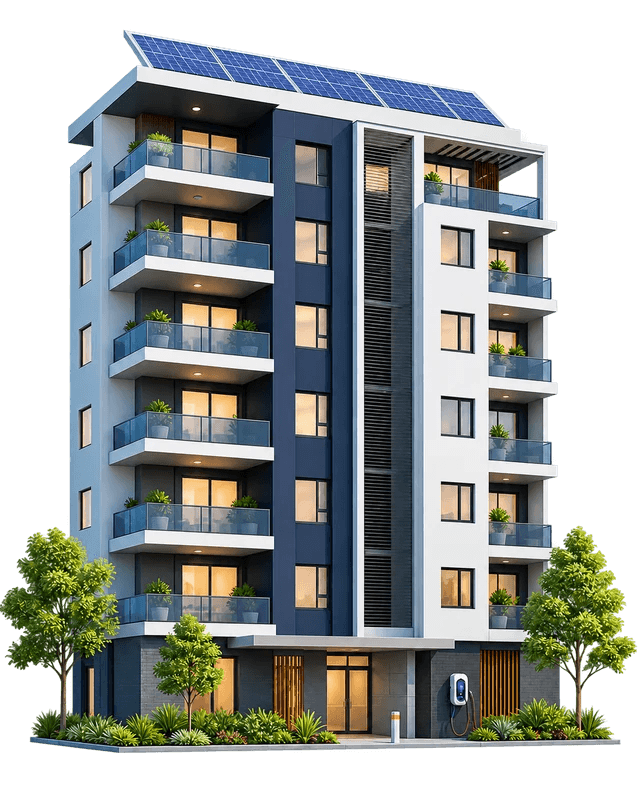
The roof makes solar power
Sunlight hits the panels and creates electricity for the building.
Allume SolShare · Delivered by All Electric Homes
AEH manages everything from the first building assessment through to installation.
How SolShare works
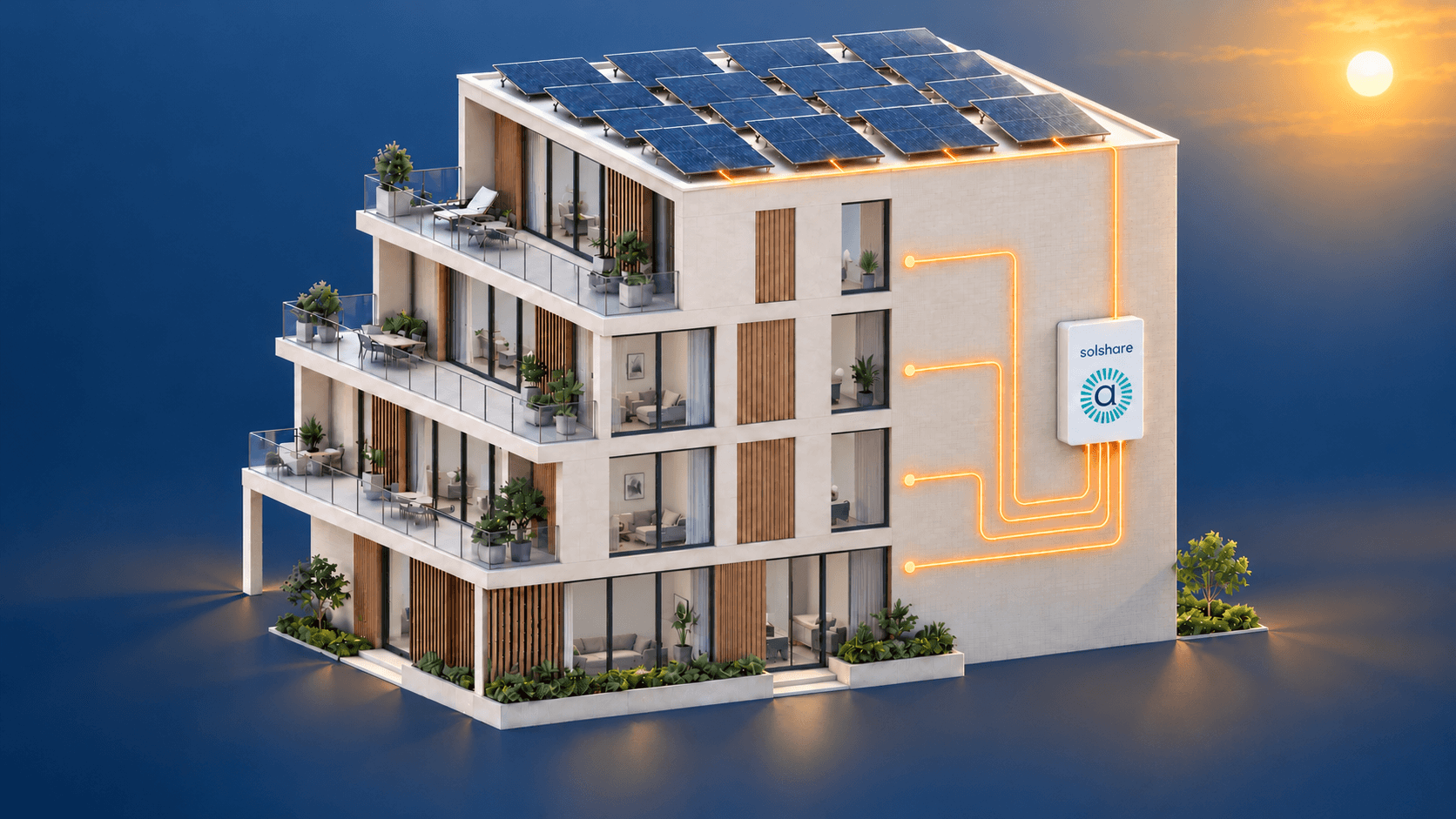
The panels make electricity when the sun is shining. SolShare measures how much electricity each connected apartment and common area is using, then sends the available solar where it is needed.
It also keeps a record of how much solar each apartment receives. Over the month, it adjusts the sharing so the building’s agreed split stays fair. No resident needs to control it.
Sunlight hits the panels and creates electricity for the building.
It can supply fridges, cooking, washing machines, air conditioning, electric hot water, EV charging and common areas.
SolShare tracks each apartment’s solar across the month and adjusts delivery to match the agreed shares.
Follow your share
SolShare responds to the total electricity being used by each connected apartment and common area.
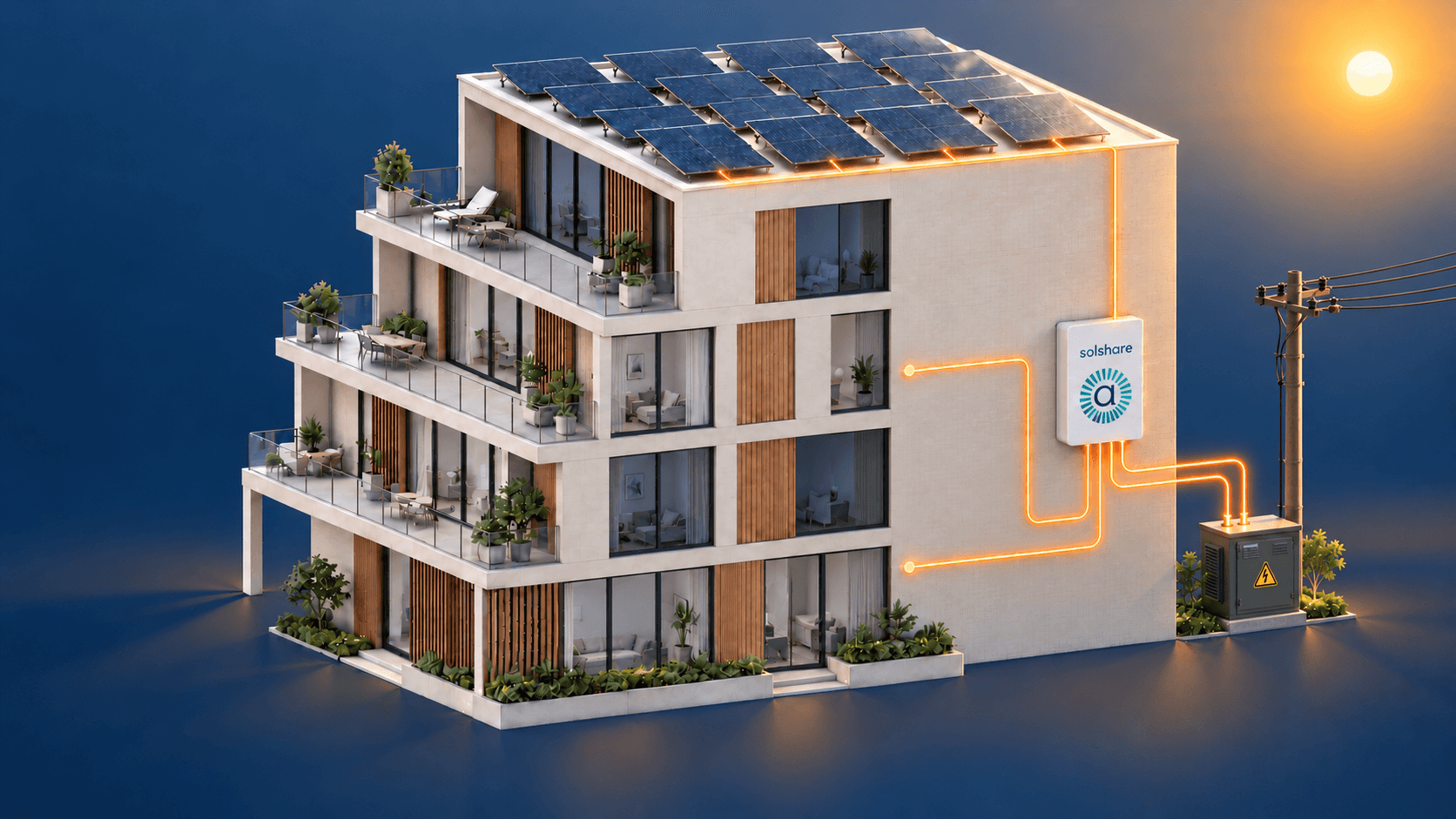 Daytime · solar follows electricity use
Even when no one is home, an apartment may still use electricity for its fridge, internet router or hot-water system. Another apartment may be running a washing machine, air conditioner or oven. SolShare sees that total use and shares the available solar automatically.
Imagine the roof makes 12 kWh during a sunny period. SolShare watches what the building is using and directs the solar automatically.
No one is home, but the fridge and router still use a small amount.
Uses 1 kWhSolShare can leave more of the current solar for other apartments.
The washing machine, dishwasher and air conditioner are running.
Uses 6 kWhSolShare can send more solar here while that electricity is needed.
The apartment uses 3 kWh for everyday appliances.
Building uses 10 of 12 kWhThe remaining 2 kWh can go to the grid.
The next time Apartment 1 needs more electricity, SolShare can send more solar to it. The system balances the agreed shares across the month. Example figures only.
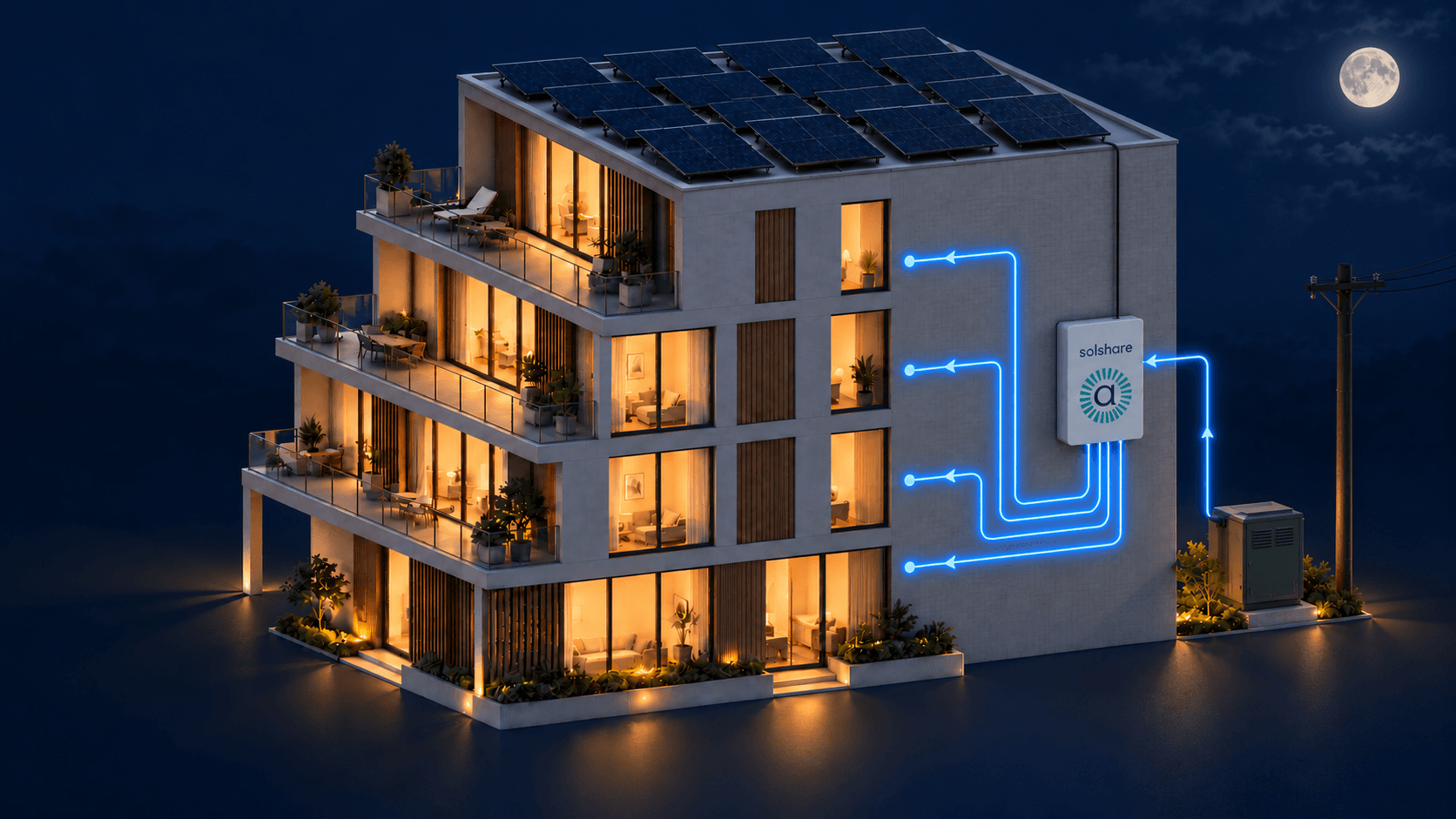 Night · apartments using power
At night the panels make no solar. On a cloudy day they may make less than the building needs. In either case, grid electricity arrives automatically, so residents use their appliances as normal.
If an apartment has 4 kWh of allocated solar exported and its retailer pays 5 cents per kWh, it receives a 20-cent credit. Now imagine it uses 3 kWh at night at 30 cents per kWh.
The smart meter records the exported solar.
4 kWh × $0.05 = $0.20The retailer adds a 20-cent credit to the bill.
The apartment uses cooking, heating and other appliances at night.
3 kWh × $0.30 = $0.90The grid electricity costs 90 cents.
The apartment still buys electricity from the grid at night.
Credit helps ≠ free electricityThe credit lowers the bill but does not store solar for later.
In this simple example, the 20-cent credit helps reduce the 90-cent grid cost. Real rates, daily charges and results differ. A smart meter and suitable retailer plan are needed for a feed-in credit.
SolShare sends solar to the connected apartments and common areas that are using electricity.
Solar the building does not use can go to the grid and may earn an eligible feed-in credit.
Residents keep using electricity normally. The grid automatically supplies what solar cannot.
Current Allume product
SolShare is the Australian-made controller that allows one rooftop solar system to serve separately metered apartments and common areas. AEH designs the complete system around your building.

SolShare 2
SolShare 2 distributes available solar between participating apartments and common areas. It can also form part of a building-wide battery design, where a suitable battery is included.

Designed for the building
AEH confirms the SolShare model, solar array, inverter, optional battery, meterboard work and connection design for the building. These details are shown in the proposal before installation.
Product information and imagery sourced from Allume’s current Australian materials. View the current SolShare product page →
What AEH does
Apartment solar needs more planning than solar on a house. AEH checks the building, explains what work is needed and manages the project.
We look at the roof, shade, electricity bills, meterboards and safe access.
We work out how many panels fit, which apartments join and how solar will be shared.
We find out whether the existing electrical boards can be used or need an upgrade.
We provide the information your owners corporation needs to make a decision.
We install and test the system, then show the building how it works.
AEH apartment experience
AEH helped this 18-apartment building replace shared gas hot water with electric heat pumps supported by rooftop solar. The project included the electrical, plumbing and meter work needed to make everything work together.
This project did not use SolShare. It shows AEH’s experience planning electrical upgrades for a complete apartment building.
Read the published case study →Is your building suitable?
A site check tells us what will fit, what will work and what it may cost.
Assess our building →Victoria · Solar for Apartments
Up to $140,000 per property. The current program is available until 30 June 2027 or until funding is exhausted.
Check current eligibility with Solar Victoria →Eligible rooftop solar may also receive an upfront federal STC discount. The amount depends on the system size and certificate value and should appear in the project quote.
Check current federal solar support →Program information checked 13 October 2026. Eligibility, funding and availability must be reconfirmed before application or publication.
Solar now · storage when it makes sense
A shared battery can save extra solar during the day and use it later. AEH must check whether a battery makes sense for your building and bills.
The Australian Government’s Cheaper Home Batteries Program may reduce the upfront cost of an eligible battery by around 30%. Shared-building eligibility, battery size and product requirements must be checked for the proposed system.
Common questions
A building assessment gives you exact answers for your property.
Maybe. We need to check the roof, meterboards, wiring, equipment space and safe access. We then explain what is possible before you commit.
No. A building can include only some apartments, although many buildings choose to include everyone. The final arrangement depends on the electrical design, the owners corporation’s decision and any grant rules.
The owners corporation first agrees on the shares—for example, equal shares for each apartment. SolShare watches electricity use and sends solar where it is useful right now. It records what each apartment receives and adjusts the sharing across the calendar month so the agreed split stays fair.
Sometimes. We inspect the existing boards to see whether they are safe and have enough room. If upgrades are needed, they will be shown in the proposal and price.
Yes, where each apartment has its own retail meter. Neighbours do not need to use the same retailer. AEH checks the meter and export requirements for every participating apartment.
It can be sent to the grid. An apartment may receive a feed-in credit for its exported allocation if it has a two-way smart meter and a retailer plan that pays a feed-in tariff.
Solar is most valuable when it is used as it is made. Someone who runs appliances during daylight may buy less grid electricity than someone who uses most of their electricity at night. Retailer prices also differ.
Yes. Allume’s SolCentre portal can show each resident their own solar allocation and electricity use. Other residents cannot see that apartment’s private usage data.
Usually no. The work normally happens in shared areas such as the roof, electrical cupboards, risers and switchboard rooms. AEH confirms access needs before the work begins.
Only if blackout backup is specially designed and included. A battery or “battery-ready” system by itself does not promise backup power. Allume generally recommends starting with solar, then using real monitoring data to work out the right battery size.
Take the next step
Tell us where the building is and how many apartments it has. AEH will explain what information we need and what happens next.
Prepare assessment enquiry →Useful information includes the building address, apartment count, electricity bills, roof plans and meterboard photos taken from a safe distance. Never open an electrical box yourself.